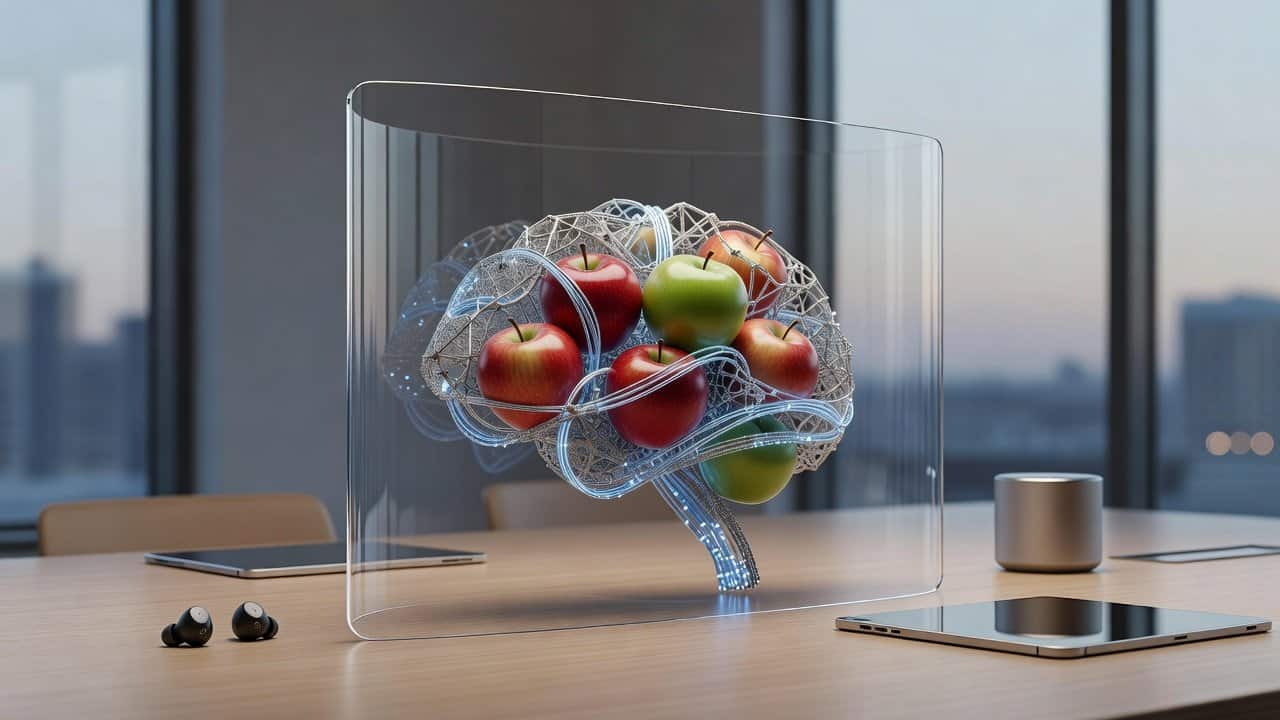

The AI Enigma: IsoDDE’s Unveiling
In a move that would make even the most secretive of sci-fi villains proud, Isomorphic Labs has unveiled IsoDDE, a groundbreaking AI tool that promises to revolutionize drug discovery. Unlike its more open-source predecessors from the AlphaFold family, IsoDDE is locked tighter than a vault in a dystopian future. This new AI marvel claims to predict protein interactions with drugs and antibodies more accurately than ever before, leaving scientists both awestruck and slightly envious.
The 27-page technical report released by Isomorphic Labs on February 10 is more of a teaser than a tell-all, offering just enough to tantalize without spilling the beans. While previous AlphaFold models were generously shared with the scientific community, IsoDDE is being kept under wraps, much to the chagrin of researchers eager for a peek under the hood. Mohammed AlQuraishi, a computational biologist, likens this advancement to an elusive AlphaFold4, hinting at its potential while lamenting the lack of transparency.
From AlphaFold to IsoDDE: A Sci-Fi Leap
AlphaFold3 was already a game-changer in drug discovery, predicting protein structures interacting with potential drugs. But IsoDDE takes this a step further, promising unparalleled accuracy in predicting drug-protein interactions, even with molecules that seem to come from another dimension. This leap in capability leaves scientists scratching their heads and wondering what kind of sorcery Isomorphic Labs has conjured up.
While open-source models like Boltz-2 from MIT have made strides in matching AlphaFold3’s performance, IsoDDE reportedly outshines them all. Its ability to predict binding affinity—a crucial factor in drug development—surpasses even the most complex physics-based methods. This revelation has the scientific community buzzing, with IsoDDE’s secret sauce becoming the subject of much speculation and intrigue.
The implications of IsoDDE’s capabilities are vast, potentially transforming the way drugs are developed and tested. But with great power comes great secrecy, and Isomorphic Labs seems determined to keep their AI’s inner workings as enigmatic as a black hole.
The Future of Drug Discovery: A Double-Edged Sword
IsoDDE’s potential impact on the pharmaceutical industry is both thrilling and daunting. On one hand, its ability to accurately predict interactions could slash the time and cost of drug development, bringing life-saving treatments to market faster than a warp-speed starship. On the other hand, the proprietary nature of IsoDDE raises questions about accessibility and equity in scientific research.
Mohammed AlQuraishi’s admiration for IsoDDE’s prowess is tempered by concerns over its exclusivity. The AI’s ability to handle molecules vastly different from its training data suggests novel methodologies, but without access to these details, replicating such success remains a distant dream for many researchers. The scientific community is left in a state of suspense, wondering if IsoDDE will remain a tool for the few or become a beacon of innovation for all.
As we hurtle toward a future where AI plays a pivotal role in medicine, the balance between innovation and openness will be crucial. For now, IsoDDE stands as a testament to the power of AI—and the allure of mystery.
A Witty Endnote on the AI Frontier
In a world where AI advancements are as unpredictable as a plot twist in a sci-fi thriller, IsoDDE is the latest chapter in the ever-evolving saga of technology and medicine. Its potential to revolutionize drug discovery is undeniable, yet its secrecy adds a layer of intrigue worthy of a dystopian narrative.
As researchers continue to probe the mysteries of IsoDDE, one can’t help but wonder: is this the dawn of a new era in drug discovery, or just another episode in the long-running series of AI’s enigmatic exploits? Only time—and perhaps a few more technical reports—will tell.
Scientific Facts Worth Knowing
- •💡 IsoDDE predicts protein-drug interactions with unprecedented accuracy.
- •💡 The AI outperforms both Boltz-2 and physics-based methods in binding affinity prediction.
- •💡 IsoDDE’s ability to handle novel molecules suggests novel methodologies.
- •💡 Previous AlphaFold models were open-source, unlike the proprietary IsoDDE.
- •💡 IsoDDE’s secrecy raises questions about accessibility and equity in research.