
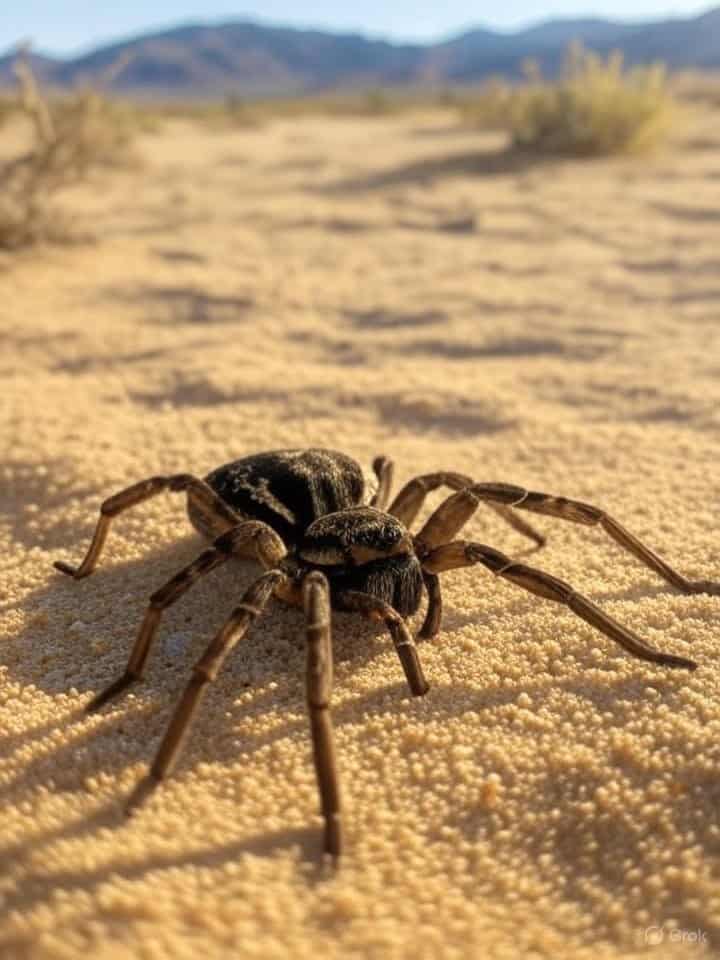
Unveiling the Cryptic Crawler
In a twist that could’ve been ripped from a sci-fi script, scientists at UC Davis have unearthed a new species of trapdoor spider, Aptostichus ramirezae, lurking beneath California’s coastal dunes. This discovery wasn’t stumbled upon by some intrepid explorer but through meticulous genomic detective work. The team, led by Professor Jason Bond and doctoral student Emma Jochim, used DNA analysis to distinguish this new species from its close relative, Aptostichus simus. It turns out, what we thought was a single species is actually two, playing a game of genetic hide-and-seek right under our beach towels. The revelation adds a thrilling layer to the biodiversity puzzle, suggesting that even in our backyard, there are still mysteries waiting to be unraveled.
Trapdoor spiders, the secretive cousins of tarantulas, lead lives straight out of a dystopian novel. Females of these species spend their entire existence in underground, silk-lined burrows, complete with a cleverly camouflaged door that snaps shut like a sci-fi airlock. They’re the ultimate ambush predators, lying in wait for the slightest vibration before darting out to snatch unsuspecting prey. The discovery of Aptostichus ramirezae underscores the complexity of these creatures and the environments they inhabit. It’s a reminder that the natural world is full of hidden narratives, each more intriguing than the last.
A Name with a Story
Naming a new species is a bit like christening a spaceship in a sci-fi saga – it’s a momentous occasion that blends science with a touch of creativity. Professor Jason Bond, a seasoned arachnologist, chose to honor Martina Giselle Ramirez, a trailblazer in the field of arachnology, by naming the spider Aptostichus ramirezae. Ramirez, known for her pioneering work on trapdoor spider population genetics and her dedication to fostering diversity in STEM, is now forever linked to this subterranean marvel. It’s a fitting tribute, given her contributions to understanding the intricate web of life that these spiders represent.
Bond’s flair for naming isn’t new; he’s previously bestowed names on spiders inspired by celebrities and cultural icons, turning each discovery into a mini-celebration of human creativity and scientific curiosity. From Aptostichus stephencolberti to Myrmekiaphila neilyoungi, these names inject a bit of humor and humanity into the often-serious world of taxonomy. It’s a reminder that science, at its best, is not just about discovery but also about connecting with the wider world.
The Peril of Paradise Lost
The discovery of Aptostichus ramirezae isn’t just a footnote in a scientific journal; it’s a stark warning about the fragility of our planet’s ecosystems. Both this new species and its relative, Aptostichus simus, are confined to the shrinking coastal dunes of California and Baja California. These habitats are under siege from development, erosion, wildfires, and the relentless advance of sea-level rise. Emma Jochim warns that Aptostichus simus is particularly vulnerable, now found only in San Diego, where the future looks increasingly grim.
The urgency of this situation cannot be overstated. As these habitats dwindle, so too do the chances of survival for these unique spiders. Jochim emphasizes that understanding the genetic diversity among these populations is crucial for effective conservation efforts. It’s a race against time, where the stakes are nothing less than preserving the intricate tapestry of life that these spiders represent. The loss of these species would be a blow not just to biodiversity but to the very narrative of life on Earth.
The Bigger Picture
The discovery of Aptostichus ramirezae is more than just a new entry in the spider species catalog; it’s a testament to the ongoing saga of life’s diversity. The work of Jochim, Bond, and their colleagues at UC Davis, supported by the National Science Foundation, underscores the importance of peering into the genetic abyss to uncover the hidden stories of our planet. It’s a reminder that even in the most unlikely places, like the sands beneath our feet, there are still secrets waiting to be discovered.
As we continue to unravel the mysteries of Earth’s biodiversity, each new species we find adds another chapter to the epic of life. These spiders, with their hidden lives and intricate genetics, remind us that the world is far more complex and interconnected than we often realize. So, next time you’re walking along a California beach, remember: beneath the sand, a thrilling saga of survival and discovery is unfolding, one spider at a time.
Scientific Facts Worth Knowing
- •💡 There are over 50,000 known species of spiders worldwide, with many more yet to be discovered.
- •💡 Trapdoor spiders live in underground burrows with a hinged, camouflaged door, waiting for prey.
- •💡 Four species of trapdoor spiders are known to live exclusively in California’s coastal dune habitats.
- •💡 Genomic DNA analysis was used to distinguish between the species Aptostichus simus and Aptostichus ramirezae.
- •💡 Coastal dune habitats are shrinking due to development, erosion, wildfire, and sea-level rise, threatening species like Aptostichus simus.