
The AI Librarian Revolution
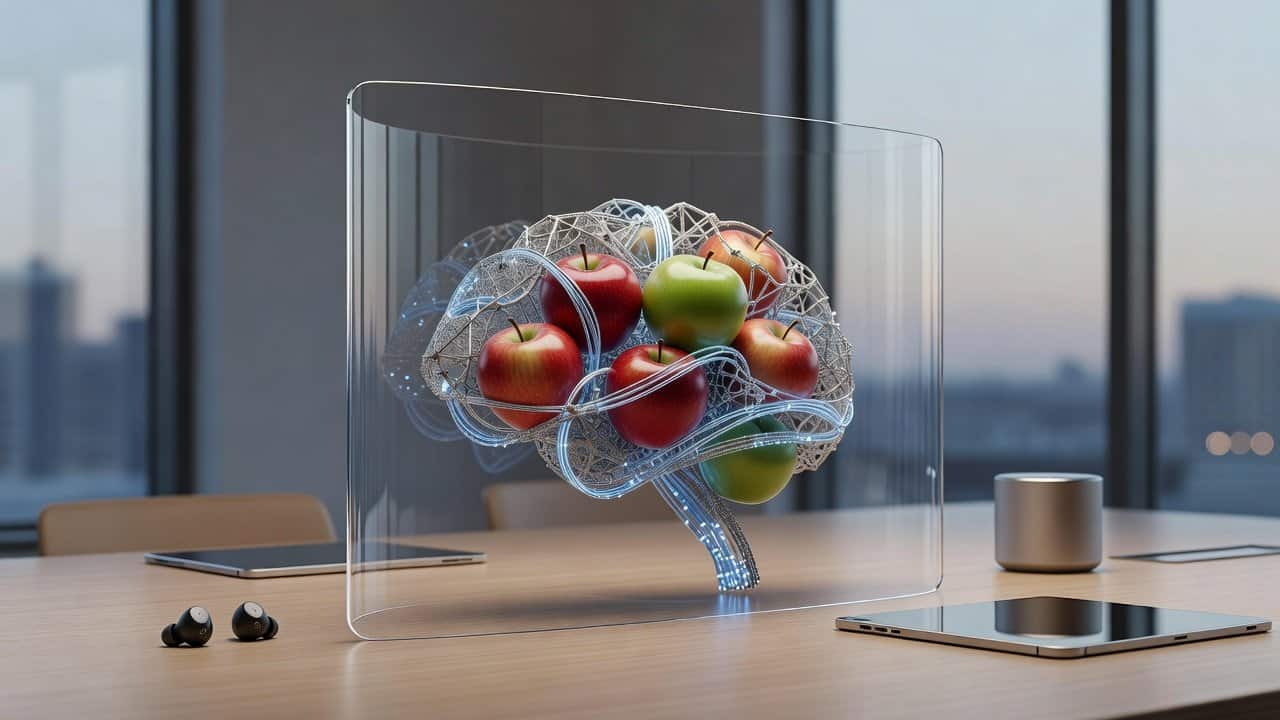
In a world where AI is often as forgetful as a goldfish, Andrej Karpathy has thrown a lifeline to the long-suffering vibe coders. The former AI head honcho at Tesla and OpenAI co-founder has concocted a new way to keep AI’s memory intact—a feat akin to giving your project a brain transplant without the messy surgery. Instead of the usual AI lobotomy, where context is reset faster than you can say ‘stateless,’ Karpathy’s ‘LLM Knowledge Bases’ promise a memory that sticks.
Karpathy’s approach is a rebellious departure from the conventional vector database and RAG pipeline. Picture an AI that moonlights as a research librarian, meticulously curating Markdown files like a futuristic Dewey Decimal System. This isn’t just about saving tokens or time; it’s about creating a self-healing, human-readable archive that could make even the most chaotic project feel like a well-organized library.
Beyond the Vector: A New Frontier
For years, the AI community has been entranced by the siren song of Retrieval-Augmented Generation (RAG). But Karpathy’s vision for LLM Knowledge Bases flips the script. Rather than slicing documents into vectors and tossing them into a database, he proposes a more elegant solution: let the LLM reason over structured text. It’s a bit like teaching a toddler to read instead of just showing them flashcards.
The architecture of this system, as depicted by X user @himanshu, unfolds in three stages: Data Ingest, Compilation, and Linting. Raw data is transformed into Markdown files, which the LLM then compiles into a structured wiki. This isn’t just about indexing; it’s about creating a living, breathing knowledge base that heals itself. As Charly Wargnier put it, ‘It acts as a living AI knowledge base that actually heals itself.’
Enterprise Implications: The Dawn of AI Librarians
While Karpathy’s setup might currently resemble a ‘hacky collection of scripts,’ the potential for enterprise is staggering. Imagine a world where your company’s Slack logs, internal wikis, and PDF reports transform into a ‘Company Bible’ that updates in real-time. Entrepreneur Vamshi Reddy even suggested this could be a whole new product category.
As AI educator Ole Lehmann mused, whoever packages this for the masses could be sitting on a goldmine. It’s not just about searching documents; it’s about authoring a coherent narrative from chaos. Eugen Alpeza highlighted the brutal transition from personal research to enterprise operations, but the promise is clear: a new dawn for enterprise AI is on the horizon.
The Future is Now: From Markdown to Synthetic Data
Karpathy’s vision doesn’t stop at compiling wikis; it extends to synthetic data generation and fine-tuning. As the wiki grows purer through continuous LLM linting, it becomes the perfect training set. Imagine an LLM that not only reads your wiki but integrates it into its very being, turning your personal research project into a private intelligence powerhouse.
In the end, Karpathy has shared more than just a script; he’s shared a philosophy. By treating the LLM as an active agent with a memory, he has transcended the limitations of ‘one-shot’ AI interactions. For researchers, it’s the end of the ‘forgotten bookmark.’ For enterprises, it’s the transformation of raw data lakes into compiled knowledge assets. Welcome to the era of the autonomous archive.
Scientific Facts Worth Knowing
- •💡 Karpathy’s LLM Knowledge Bases use Markdown files for AI memory retention.
- •💡 Retrieval-Augmented Generation (RAG) often uses vector databases for data management.
- •💡 Karpathy’s system compiles structured wikis from raw data for AI reasoning.
- •💡 The system performs ‘linting’ to maintain and heal the knowledge base.
- •💡 This approach has implications for enterprise data management and AI integration.