Fossilized Floral Felonies
In a groundbreaking twist that feels ripped straight from a time-traveling detective’s case file, scientists have uncovered a 24-million-year-old crime scene where ancient bumblebees were caught with the botanical equivalent of stolen goods—pollen. The scene of the crime? An ancient crater lake in Enspel, Germany, which, back in the day, was a lush oasis teeming with life. Researchers, acting as forensic paleontologists, meticulously sifted through 127 fossilized flowers, buds, and bees, and voilà, they found the smoking gun: pollen particles that matched the ancient flowers to their buzzing culprits. This isn’t just any old pollen party; it’s the oldest direct evidence of a pollination relationship between two species ever observed, according to a study published in New Phytologist on September 22.
Constanza Peña-Kairath, a former expert in ancient insect pollination at the University of Barcelona, was not involved in the study but highlighted its significance. ‘The mere presence of pollen on a fossil bee suggests floral visits, sure, but this study provides the crucial, exceptionally well-preserved evidence of a direct relationship between the pollinator and the pollinated,’ she explains. This isn’t just about bees and flowers having a fling; it’s about a long-term commitment that has been preserved in stone, waiting for us to piece it together like a cosmic jigsaw puzzle.
The Lake That Became a Time Capsule
Imagine a serene lake, not unlike a sci-fi setting where ancient life thrives, only to be swallowed by time itself. That’s what happened in Enspel, where millions of years ago, a diverse array of vegetation and bustling bees lined the shores. The lake, acting as a natural time capsule, preserved the remains of bees and flowers that occasionally fell into its waters, covered by sediments that fossilized their secrets. Christian Geier, a paleobotanist at the University of Vienna, notes, ‘Insects fall into water bodies and drown all the time. In the case of these bumblebees, they were lucky enough to escape being fish food and instead sank to the bottom, becoming part of this ancient narrative.’
Geier and his team played the role of scientific archaeologists, unearthing not just any bees and flowers, but new species altogether. They identified Tilia magnasepala, a new species of linden tree flower, and two new bumblebee species, Bombus messegus and B. palaeocrater. These are the oldest known bumblebee fossils in Europe, adding a thrilling chapter to the continent’s paleontological history. Both the flowers and bees were blanketed in pollen, setting the stage for a detailed forensic analysis.
Pollen: The Tiny Time Travelers
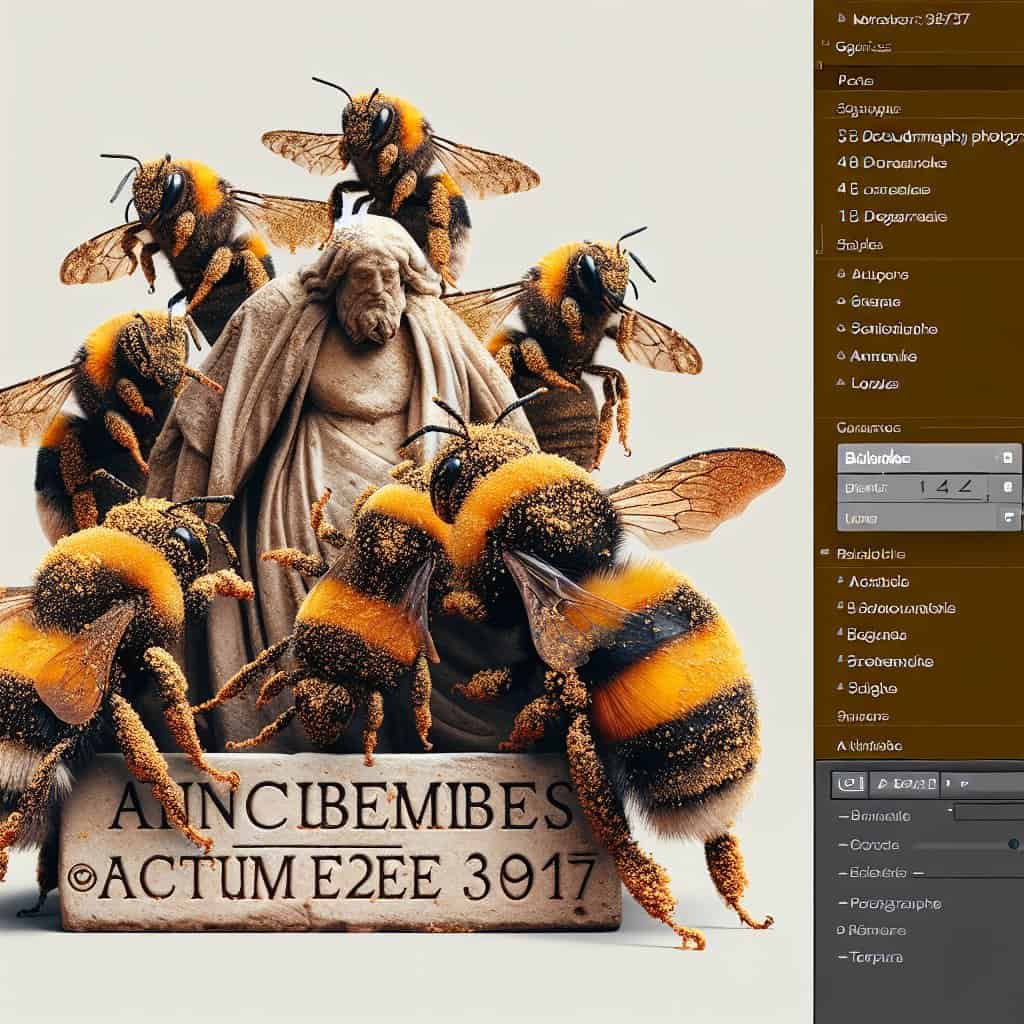
Using a scanning electron microscope, the researchers zoomed in on the pollen particles extracted from the fossils, revealing a match between the pollen in the flowers and on the bees. It’s as if the pollen itself traveled through time, carrying the story of these ancient interactions. The bees, covered in pollen on their legs, mouthparts, and abdomens, were clearly collecting it from the cup-shaped linden flowers. This isn’t just a snapshot; it’s a vivid, 3D movie of ancient pollination in action.
Evidence of insects carrying pollen from nonflowering plants dates back 280 million years, predating the evolutionary explosion of flowering plants by 150 million years. The success of flowering plants today, which make up about 90 percent of modern flora, owes much to their pollinators. This ancient partnership between linden trees and bumblebees, still alive and well in Europe, underscores the enduring nature of these relationships.
A Timeless Bond
Friðgeir Grímsson, another paleobotanist from the University of Vienna, emphasizes the significance of this discovery. ‘This is the longest known direct proof for a bee-flower interaction that is still ongoing in Europe,’ he states. Being able to trace this relationship back 24 million years isn’t just special; it’s a testament to the resilience and continuity of life’s most intimate partnerships.
So, the next time you see a bumblebee buzzing around a linden tree, remember: you’re witnessing a saga that began millions of years ago. It’s not just pollination; it’s a cosmic dance that has been choreographed over eons. And if these ancient bumblebees could talk, they’d probably say, ‘We were just doing our job—don’t make a big deal out of it.’ But we will, because in the grand scheme of things, it’s a pretty big deal indeed.
Scientific Facts Worth Knowing
- •💡 The oldest direct evidence of a pollination relationship between two species dates back to 24 million years ago.
- •💡 The study analyzed 127 fossilized flowers, buds, and bees from an ancient crater lake in Enspel, Germany.
- •💡 Two new species of bumblebees, Bombus messegus and B. palaeocrater, were identified, marking the oldest known bumblebee fossils in Europe.
- •💡 Researchers used a scanning electron microscope to match pollen particles from the fossils, confirming the pollination relationship.
- •💡 Linden trees still depend on bumblebees for pollination, showcasing a 24-million-year-old interaction still ongoing in Europe.