
AI’s Creative Awakening
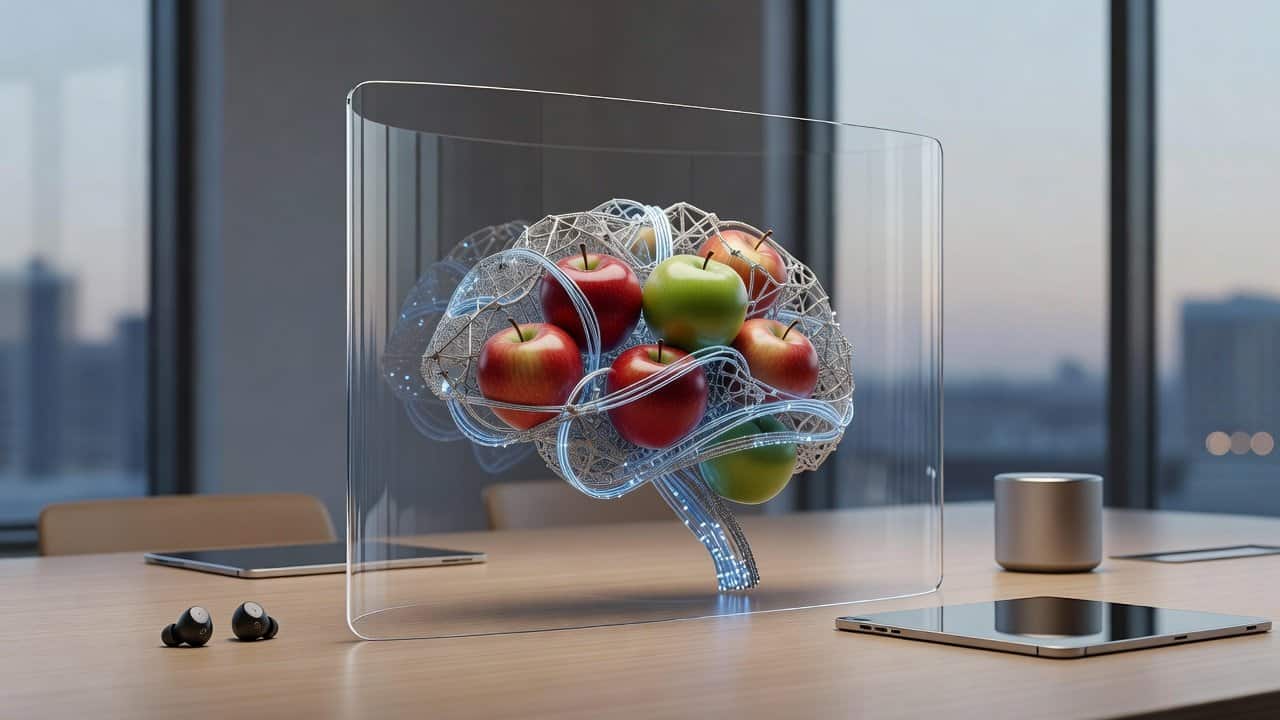
In a twist that would make even Asimov raise an eyebrow, researchers have pitted AI against 100,000 unsuspecting humans in a creativity contest. Led by the intrepid Professor Karim Jerbi from Université de Montréal, with a cameo by AI legend Yoshua Bengio, this study is the creative equivalent of pitting HAL 9000 against Shakespeare. The results? AI systems, like GPT-4, are now flexing their creative muscles, occasionally outshining average humans on certain tasks. But fear not, the most creative humans still hold the upper hand, proving that our species isn’t obsolete just yet.
The study, published in Scientific Reports, shows AI can indeed mimic human creativity, but only up to a point. While AI can churn out creative content faster than you can say ‘Skynet,’ the crème de la crème of human creativity remains untouched. The AI’s performance is impressive, but when compared to the top 10 percent of human participants, it becomes clear that AI still has a few circuits to cross before it can dethrone the human imagination.
Measuring the Unmeasurable
To compare creativity between humans and machines, researchers used the Divergent Association Task (DAT). This test is like asking participants to play a word salad game, listing unrelated words like ‘galaxy’ and ‘harmonica.’ The goal? To see who can think outside the box—or, in AI’s case, outside the motherboard. Despite its simplicity, the DAT provides a glimpse into the broader cognitive processes that fuel creativity, proving that sometimes, less is more.
The DAT isn’t just a linguistic exercise; it’s a window into the minds of participants, whether they’re carbon-based or silicon. It takes mere minutes to complete, making it accessible for anyone with an internet connection and a penchant for wordplay. But does AI’s prowess on this test translate to more complex creative endeavors? That’s where things get dicey.
From Haikus to Hollywood
The researchers didn’t stop at word association. They unleashed AI on creative writing tasks, challenging it to pen haikus and concoct movie plots. The results? AI managed to outshine the average human, but when pitted against top-tier human talent, it was like watching a calculator try to compose a symphony. Sure, AI can string words together, but the nuance and depth of human creativity remain elusive.
The study also revealed that AI’s creative output can be tweaked by adjusting its ‘temperature’—a setting that determines how predictable or adventurous its responses are. Crank it up, and AI starts to sound like it’s had one too many espressos. Dial it down, and it’s back to playing it safe. It’s a bit like giving AI a mood ring and watching it oscillate between ‘meh’ and ‘manic genius.’
AI: The Creative Sidekick
So, will AI replace human creators? Not quite. While AI can match or even surpass average human creativity in some areas, it’s more of a creative sidekick than a usurper. AI serves as a tool that can amplify human creativity, opening new avenues for exploration and helping us think outside the proverbial box—or server.
In the end, studies like this challenge us to redefine creativity and embrace AI as a collaborator rather than a competitor. Who knows? The future might see AI and humans co-authoring the next great novel or composing the next symphony. Until then, we’ll continue to marvel at AI’s quirks and celebrate the boundless potential of human imagination.
Scientific Facts Worth Knowing
- •💡 AI systems like GPT-4 can outperform average human creativity on certain tasks.
- •💡 Over 100,000 human participants were compared to AI in creativity tests.
- •💡 AI’s creativity can be adjusted via technical settings, such as ‘temperature.’
- •💡 The Divergent Association Task measures divergent creativity using unrelated words.
- •💡 AI may serve as a creative assistant, not a replacement for human creators.