
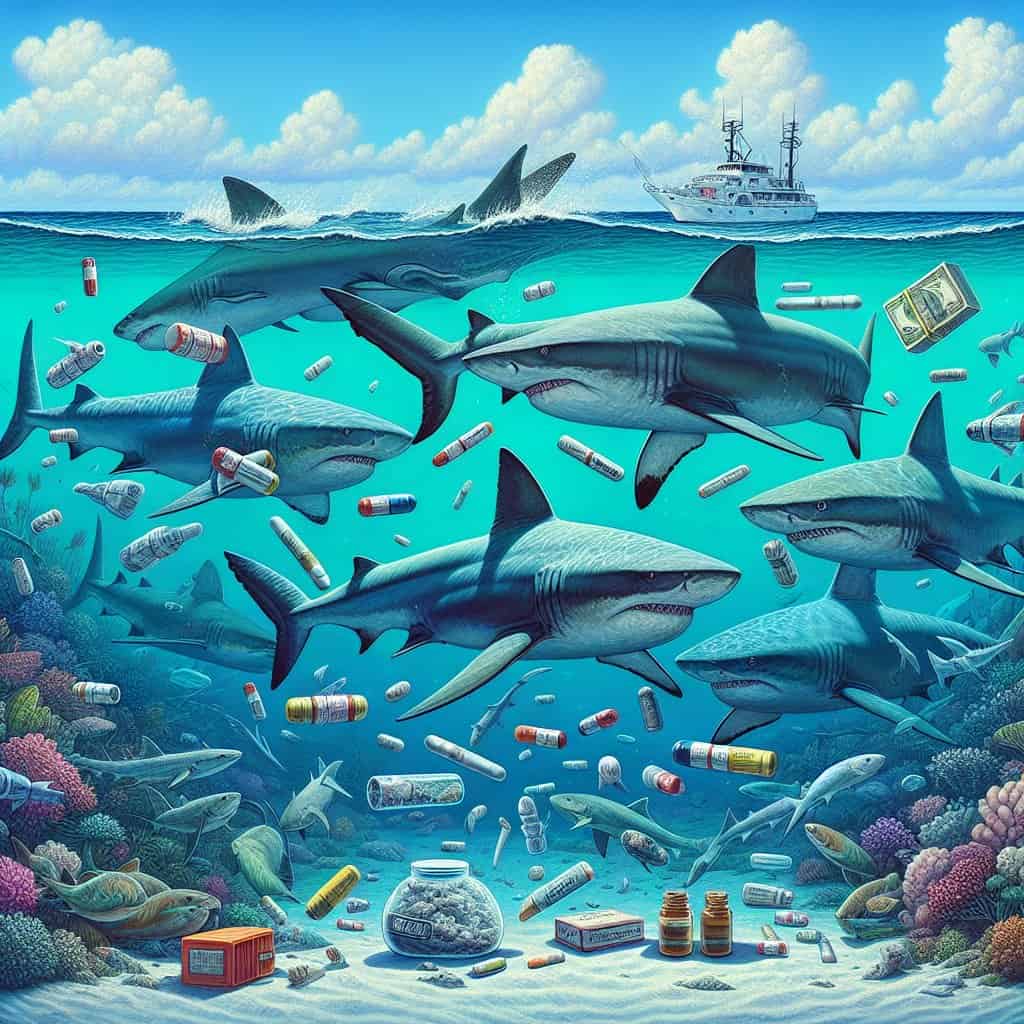
Sharks on a Chemical High
In a plot twist worthy of a sci-fi thriller, sharks off the Bahamas coast are unwittingly becoming the ocean’s own drug mules. No, they’re not smuggling for an underwater cartel; rather, they’re involuntarily ingesting a cocktail of human pharmaceuticals. From caffeine hits to painkiller doses, these sea predators are revealing just how much we’ve turned their pristine waters into a dystopian drug depot.
Biologist Natascha Wosnick, from Brazil’s Federal University of Paraná, is part of the team uncovering this aquatic pharmacological mystery. After finding traces of cocaine and rare earth elements in Rio de Janeiro’s sharks, Wosnick’s team turned their attention to the Bahamas. Their recent study, published in the May issue of Environmental Pollution, analyzed the blood of 85 sharks near Eleuthera Island. The results? A staggering 28 sharks tested positive for drugs, with caffeine leading the pack, followed by acetaminophen and diclofenac.
The Curious Case of the Drugged Sharks
Most of these chemically-altered sharks were caught near an inactive fish farm, a popular dive spot. But before you blame the fish farm, consider the more likely suspects: humans. According to Wosnick, the drugs likely hitch a ride on currents from island sewage or, more humorously, from divers who relieve themselves in the ocean. It’s a reminder that our vacation habits have unexpected ripple effects.
In a particularly bizarre case, a baby lemon shark tested positive for cocaine. While the amount was less than what Wosnick’s team found in Brazilian sharks, it was enough to suggest recent exposure. This little shark might have bitten into a cocaine-laced package, a not-so-uncommon occurrence near its nursery creek. As Wosnick notes, sharks are naturally curious, biting to investigate their surroundings, which sometimes leads to unexpected encounters with human detritus.
Metabolic Mayhem in the Ocean
Beyond the initial shock of finding drugs in sharks, the study unearthed another layer of intrigue: metabolic changes. Sharks with drug-contaminated blood showed shifts in markers like lactate and urea. While the long-term effects remain murky, these changes could alter shark behavior. Wosnick points to research in goldfish suggesting caffeine boosts their energy and focus, much like it does in humans. So, are we breeding a new generation of hyperactive sharks?
Oceanographer Tracy Fanara from the University of Florida, who was not involved in the study, emphasizes the significance of these findings. The detection of pharmaceuticals and cocaine is alarming, but the associated metabolic shifts add a new dimension to the problem. Contaminated sharks exhibited changes in markers linked to stress and metabolism, hinting at broader ecological implications.
A Wake-up Call for Paradise
The Bahamas, often seen as an untouched paradise, is now facing the harsh reality of chemical pollution. Wosnick warns that, like plastic, chemical pollutants are more widespread than we care to admit. While oil spills and plastic waste grab headlines, the insidious nature of chemical contamination quietly threatens marine ecosystems.
Fanara, who previously worked on the documentary Cocaine Sharks, underscores the interconnectedness of coastal infrastructure, tourism, and marine life. The findings serve as a stark reminder that our actions on land have far-reaching consequences in the ocean. As we continue to treat the sea as our personal dumping ground, we might find our next beach vacation accompanied by a side of caffeinated sharks. Now, there’s a sci-fi plot twist no one saw coming.
Scientific Facts Worth Knowing
- •💡 Sharks in the Bahamas have been found with caffeine and painkillers in their blood.
- •💡 28 out of 85 sharks tested positive for various drugs, including caffeine and acetaminophen.
- •💡 A baby lemon shark showed traces of cocaine, indicating recent exposure.
- •💡 Metabolic markers in contaminated sharks showed shifts, potentially affecting behavior.
- •💡 Chemical pollution in the Bahamas is more pervasive than oil spills or plastic waste.